CRM Is Not Just Software, It’s a Complete Growth System

Why CRM Is More Than Just a Software for Your Business
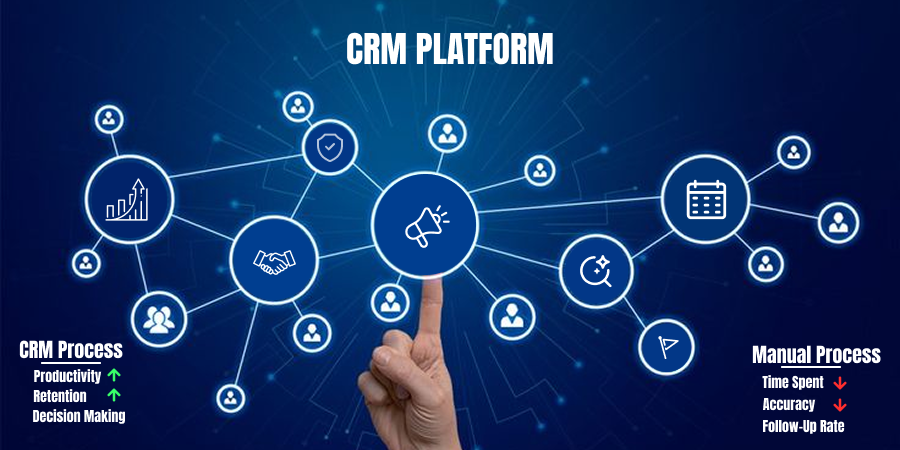
Usually, when people are asked what a CRM is, they think that a CRM is just a tool used for storing information related to customers. However, the actual use of CRM is much more than just a tool for the daily functioning of a business. CRM is a system that can really help a business understand its customers better, as well as connect with them more systematically.
With the use of CRM, a business can really understand how to manage its customers better, as the system can really help the teams understand how to keep track of the customers, as well as connect with them on time. This way, the business can really connect with its customers better, as the teams are not confused due to the lack of a single system for all the information related to the customers. This can really help the teams work more productively, which can really lead to the growth of the business. So, CRM is not just a system, but a tool for the growth of a business.
CRM as a Business Strategy for Sustainable Growth
However, CRM is not just a system for managing customer data. Rather, it is a long-term business strategy for growing a business in a steady and sustainable manner. By using CRM effectively, businesses can have a complete view of their customers' needs, preferences, behavior, and previous interactions with the business. This enables them to spot new business opportunities while making business decisions with confidence.
Most importantly, CRM helps businesses develop better business relationships with customers. By tracking leads, following up with customers, staying in touch with customers, etc., businesses can develop better customer relationships. Personalized communication made possible by CRM helps develop trust with customers over time.
Additionally, CRM helps businesses develop better business teams by allowing all teams to access all customer data in one place. This enables teams to serve customers better while providing a better customer experience. By considering CRM not just as a system but as a business strategy for growth, businesses can leverage CRM as an extremely powerful system for growth, better business relationships, and long-term business competitiveness.
Key Benefits of Using CRM for Business Growth
Better Customer Understanding
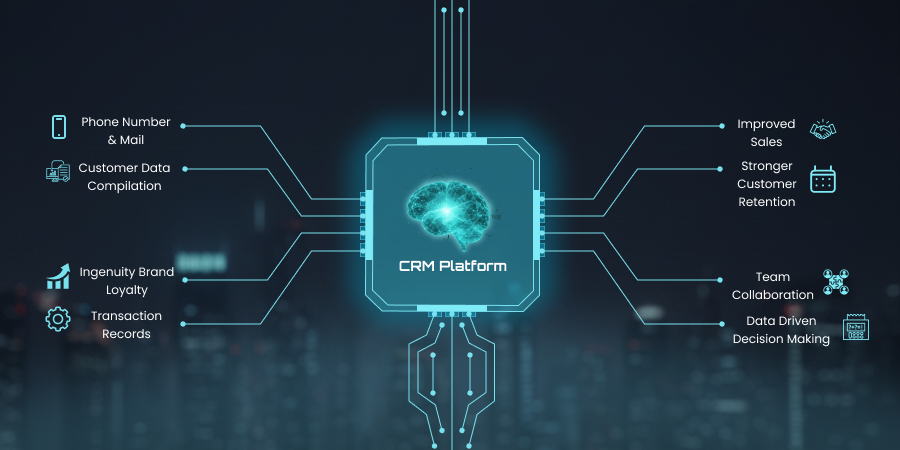
CRM compiles and keeps customer details such as phone numbers, addresses, email, transaction records preferences in one place. After analysing this data, a company can perfectly grasp the buyer's behaviours and requirements. This allows teams to communicate more effectively and deliver relevant solutions at the right time.
Improved Sales and Lead Management
CRM also helps the sales team keep track of leads right from the first interaction until the final conversion is made. This would increase the overall sales performance of the teams.
Stronger Customer Retention
The businesses would also be able to maintain their customer relationships through regular follow-ups, ensuring that customers are contacted in time and messages are sent accordingly. This would increase customer satisfaction, resulting in higher brand loyalty in the future.
Better Team Collaboration
CRM would enable various teams, including sales, marketing, and customer service teams, to access information related to customers. This would prevent confusion among team members, resulting in a better customer experience overall.
Data-Driven Decision Making
CRM offers sales performance, customer trends, and team activity reports and insights. These are used in the management to determine strengths, address issues before they arise, and make sound decisions that would promote business in the long run.
Better Customer Retention
Within a CRM, businesses could stay in touch with their customers by following up in a timely manner and sending them customized messages. Such regular interaction leads to increased trust and customer satisfaction which will increase loyalty to the brand in the long run.
CRM vs Manual Process: Efficiency Comparison
| Aspect | CRM Process | Manual Process |
|---|---|---|
| Time Spent on Data Entry | Reduces effort by 40–60% through automation | Takes 100% manual effort, more time-consuming |
| Data Accuracy | Around 90–95% accuracy due to validation and structured input | Accuracy drops to 60–70% because of manual errors |
| Lead Follow-Up Rate | Improves follow-ups by 50–70% using reminders and alerts | Only 30–40% follow-ups happen on time |
| Customer Response Time | Response time improves by 35–50% | Slow responses, improvement less than 15–20% |
| Team Productivity | Increases productivity by 30–45% | Productivity improves only 10–15% |
| Customer Retention | Retention improves by 20–30% with consistent engagement | Retention remains low at around 5–10% |
How Businesses Can Implement CRM Successfully
Right CRM Selection
The selection of a CRM that aligns with the size of the business, its objectives, and working processes can assist in ensuring a successful adoption process, increased usability, and long-term value of the system.
Team Training
Effective training enables the staff to be confident in using the CRM features, ensuring that the data they use is correct, effective in handling the tasks, and enhancing productivity in their day-to-day operations.
Process Integration
The implementation of CRM in the activities of the sales, marketing, and support departments would ensure that it is always used, minimize manual operations, and provide a seamless customer experience throughout the teams.
Performance Monitoring
Frequent analysis of CRM reports and analytics will assist companies in identifying gaps, enhancing strategies, optimizing processes, and improving performance in the long-term.
How to Maximize CRM Value and Avoid Common Mistakes
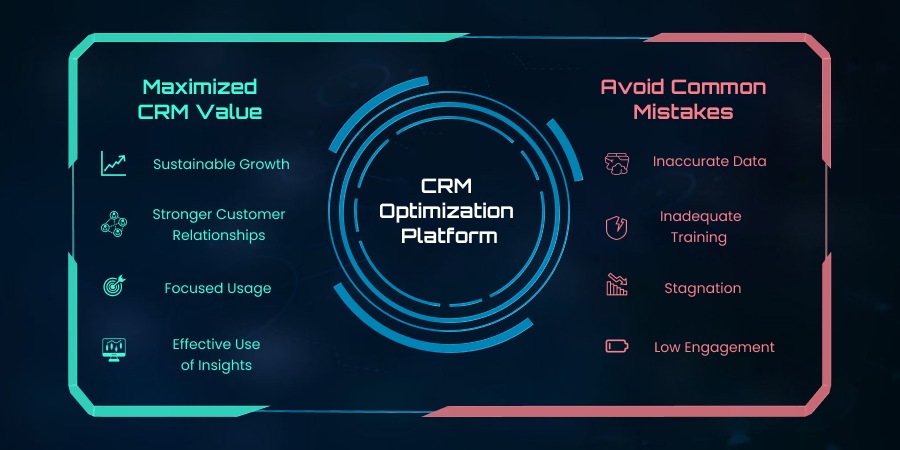
However, to achieve real value from CRM, businesses need to move beyond data entry activities and also avoid common pitfalls like poor data quality, inadequate training, and poor usage. A well-utilized CRM can enable businesses to streamline their processes, enhance efficiency, and develop meaningful customer interactions. By following best practices for CRM, businesses can build stronger customer relationships to drive sustainable growth.
Setting Clear CRM Goals
Defining clear and measurable goals helps businesses use CRM in a focused and purposeful way. When objectives are aligned with sales, marketing, and customer service needs, it becomes easier to track progress and measure success.
Maintaining Accurate Data
Accurate and up-to-date customer data is essential for effective CRM usage. Clean data helps teams communicate better, generate reliable insights, and make informed decisions without confusion or errors.
Encouraging Team Adoption
CRM delivers real value only when teams use it consistently. Encouraging daily usage, providing support, and explaining benefits help employees stay engaged and increase overall return on investment.
Using CRM Insights Effectively
CRM reports and analytics provide valuable insights into customer behavior and business performance. Using these insights helps businesses improve strategies, identify opportunities, and respond to challenges proactively.
Continuous Improvement
CRM implementation is an ongoing process. Regularly reviewing performance, updating workflows, and adapting to changing business needs ensures the system remains effective and valuable over time.
CRM Challenges and Solutions
| CRM Challenge | Impact on Business | Solution |
|---|---|---|
| Poor Data Quality | Leads to incorrect insights and poor customer communication | Regularly clean and update CRM data |
| Low User Adoption | CRM is underutilized and fails to deliver value | Provide proper training and encourage daily usage |
| Lack of Clear Goals | CRM usage becomes unfocused and inefficient | Define clear objectives before implementation |
| Inconsistent Follow-Ups | Missed opportunities and low customer satisfaction | Use CRM reminders and automation features |
| Limited Use of Reports | Decisions are made without proper insights | Analyze CRM reports to improve strategies |
The Future of Business Growth with CRM
The future of business growth depends on the extent that the business is able to utilize the strength of CRM for improving customer relationships. In the increasing customer-centric business culture, CRM will be a key factor for businesses to identify customer needs and create a more interactive customer experience. With better data analysis capabilities, businesses will be able to make more intelligent decisions for staying ahead in the competitive market. This will help businesses achieve success in the long run.
Recent Blogs

Automate IndiaMart Lead Capture into Your CRM Workflow
23-May-2026
Improve Lead Conversion with WhatsApp Integration Business
22-May-2026
How Automation Boosts Sales and Marketing for Your Business
29-April-2026
How SMEs Lose Sales Without CRM & Poor Data Management
29-April-2026
CRM Is Not Just Software, It’s a Complete Growth System
26-March-2026
Best AI Powered Marketing Tools Creating Content for 2026
25-March-2026
GenAI Prompt Engineering Tips & Tricks for Developers
20-February-2026
Top Custom CRM Solutions for MSMEs in Sales & Marketing
17-February-2026