How SMEs Lose Sales Without CRM & Poor Data Management

Why SMEs Miss Sales Growth Without a Proper CRM System
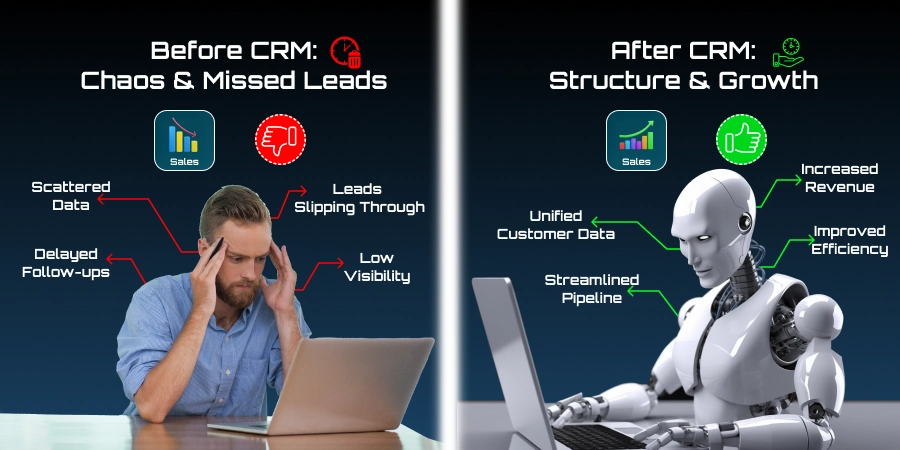
Are you struggling to keep track of sales and customers as your business grows?
Small and medium sized businesses often start with simple tools like spreadsheets, phone calls, and messaging apps. It works in the beginning, but as leads increase, things quickly become messy and hard to manage.
Leads start slipping through, follow ups get delayed, and customer details get scattered across different places. This creates confusion, slows down response time, and directly impacts sales opportunities.
Without a clear system, businesses also lose visibility into their sales pipeline. It becomes difficult to know which deals are active, which leads need attention, and where progress is getting stuck.
In today's fast moving market, customers expect quick responses and smooth communication. When businesses fail to deliver that consistency, they risk losing trust and potential revenue. This is where structure becomes essential for growth. If you want to understand how to increase sales and improve customer management, read further below to discover how a CRM system can help your business grow.
5 Ways Businesses Miss Leads Without CRM Software
Thousands of small and medium-sized enterprises (SMEs) miss sales even without noticing. This is primarily due to the absence of an appropriate system to deal with leads and customers. Without CRM such activities as follow-ups, data tracking and communication are not addressed properly. This chaotic practice silently minimises earnings and slackens growth.
Key Challenges Small Businesses Face Without a CRM System
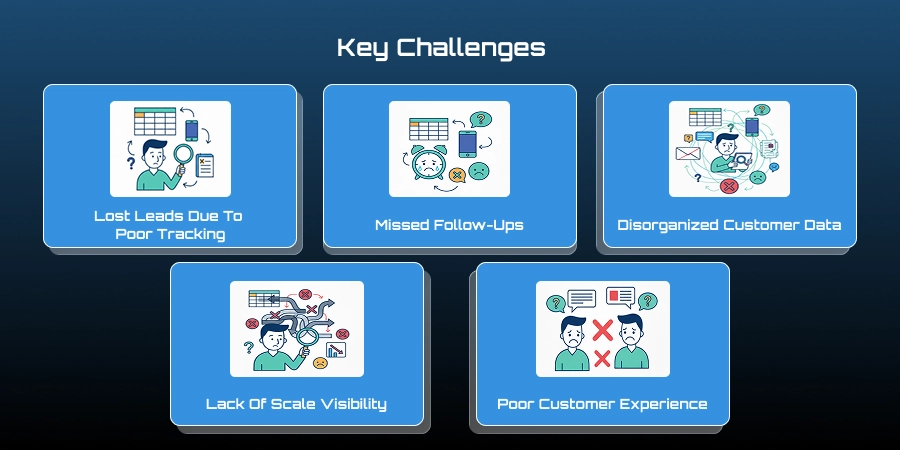
Lost Leads Due to Poor Tracking
Without a CRM, leads are often stored in Excel sheets, WhatsApp chats, or notebooks with no clear system. This makes it easy to lose contact details or forget which leads are still active. When leads are not tracked properly, businesses miss valuable sales opportunities and fail to convert interest into real customers.
Missed Follow‑Ups
Leads have to be converted into paying customers through follow-ups. The sales teams can forget to call or message at the appropriate time without reminders or automation. A minor delay may make the customer lose interest and cease his or her response or switch to a different business that responds quicker.
Disorganized Customer Data
The data about customers is distributed in emails, spreadsheets, chat applications, and handwritten notes. This causes confusion and the difficulty of locating important information in a short period of time. Consequently, there is less prompt response, errors are made in orders or price, and opportunities missed in sales.
Lack of Sales Visibility
Businesses are unable to have the stand-up of their leads or deals that are in progress without a CRM. They are not aware of what leads are open, who is about to make a purchase or where the pipeline is clogged. This invisibility results in poor decision making, misplaced priorities and missed sales which would have been closed with better planning.
Poor Customer Experience
Customers desire prompt customer service and personalized interaction. Lack of CRM means that businesses are unable to monitor previous interactions, preferences or problems. This implies that they usually provide generic responses or ask the same question and this is impersonal. Poor relationships drive customers away and make them find more structured competitors over time.
How CRM Can Help SMEs Boost Sales Performance
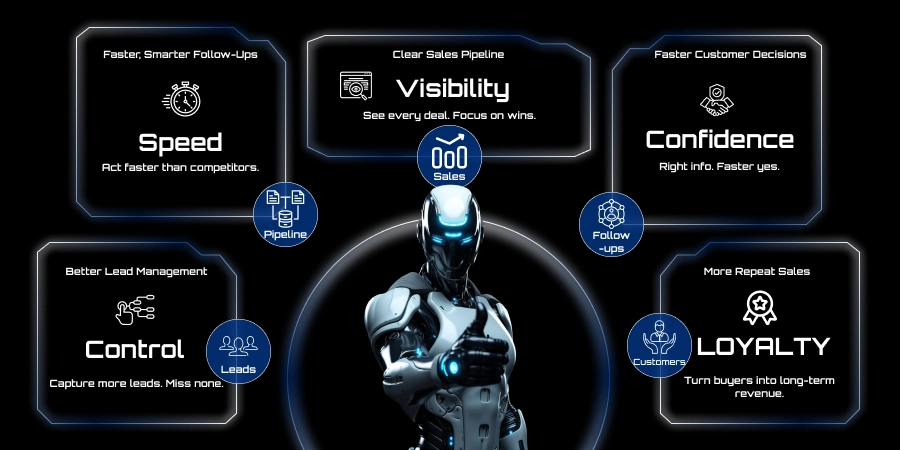
Customer Relationship Management (CRM) system assists the SMEs to sell more products because leads, follow-ups, and customer information are stored under one roof. A CRM provides a clear and systematic procedure to handle any sales opportunity as opposed to spreadsheets, WhatsApp, or hand-written notes. This assists companies to keep track of customers with ease and seal more deals.
Better Lead Management
Using a CRM, all new leads are automatically captured on forms, calls, or chats and stored in a central list. The SMEs have the option of tagging leads by source, interest level and stage in the sales process hence high potential customers are not forgotten. Such an organised process will enhance the possibility of turning more leads into actual sales.
Faster and Smarter Follow‑Ups
A CRM sends notifications and is able to automatize follow-up emails or tasks following every interaction. Sales teams are able to make calls when the lead is most interested, and this minimizes chances of losing the lead to a competitor. Regular follow-ups are also useful in creating trust and bringing customers to the point of purchase.
Clear View of the Sales Pipeline
A CRM presents a live picture of all the leads and deals, starting with the ones that have just been contacted down to the ones prepared to close. The owners of SMEs can get an insight into the deals that are stalled, where time is being lost, and which members of the team require assistance. This exposure assists them to concentrate on the correct opportunities and enhance conversion rates.
Safer, Faster Customer Decisions
Product history, pricing notes, and previous conversations are always visible with a CRM. The salespeople are able to use an appropriate price, provide applicable add-ons, and do not make errors that slow the decision-making process. Customers will purchase faster when they are well-informed and confident.
More Repeat Sales and Upsells
A CRM will maintain a record of all purchases, renewal dates, and preferences of the customers. The SMEs are also able to proactively reach customers to renew, upgrade, or repurchase. This is beneficial in that repeat customers are simpler and less expensive to sell to and hence SMEs will be able to increase sales without necessarily pursuing new leads.
CRM Features and Benefits for SMEs
| CRM Feature | What It Does | Benefit for SMEs |
|---|---|---|
| Lead Management | Captures and tracks leads from different sources (website, calls, social media, etc.). | Ensures no lead is missed and increases conversions. |
| Follow‑Up Reminders | Sends alerts for calls, emails, and tasks. | Improves timely follow‑ups and helps close more deals. |
| Customer Database | Stores all customer details in one place. | Easy access to data and better, more consistent communication. |
| Sales Pipeline Tracking | Shows the progress of deals through stages. | Helps identify and fix delays in the sales process. |
| Reporting & Analytics | Provides sales and performance reports. | Supports better decision‑making and planning. |
| Task Management | Assigns and tracks daily activities. | Improves team productivity and accountability. |
| Integrations | Connects with email, WhatsApp, and other tools. | Reduces manual work, avoids double entry, and saves time. |
Accelerate SME Growth with Inklidox's Smart CRM Solutions
Smart CRM solutions like Inklifox help SMEs move from manual and unorganized sales processes to a structured and data driven system. Inklifox provides a CRM platform that automates follow ups, centralizes customer data, and gives clear visibility into every stage of the sales pipeline so teams can focus more on closing deals.
With better organization and fewer errors, SMEs improve lead conversion, strengthen customer relationships, and respond faster to customer needs. This creates a smoother sales process and a better overall customer experience.
Over time, Inklifox CRM supports stronger ROI by turning CRM adoption into a growth focused strategy. It helps SMEs scale faster, improve efficiency, and stay competitive in a rapidly changing business environment. To experience these benefits in your business, contact Inklifox for the best CRM software designed for SMEs.
Recent Blogs

Automate IndiaMart Lead Capture into Your CRM Workflow
23-May-2026
Improve Lead Conversion with WhatsApp Integration Business
22-May-2026
How Automation Boosts Sales and Marketing for Your Business
29-April-2026
How SMEs Lose Sales Without CRM & Poor Data Management
29-April-2026
CRM Is Not Just Software, It’s a Complete Growth System
26-March-2026
Best AI Powered Marketing Tools Creating Content for 2026
25-March-2026
GenAI Prompt Engineering Tips & Tricks for Developers
20-February-2026
Top Custom CRM Solutions for MSMEs in Sales & Marketing
17-February-2026